
Do Rabbits Need a Cage?
No. Rabbits do not need cages and are healthier without them. A rabbit needs a secure, rabbit-proofed space it can move through freely, with hiding places, secure footing, and somewhere to dig. Confinement to a cage is associated with poor muscle and bone development, behavioral problems, and stress-related illness.
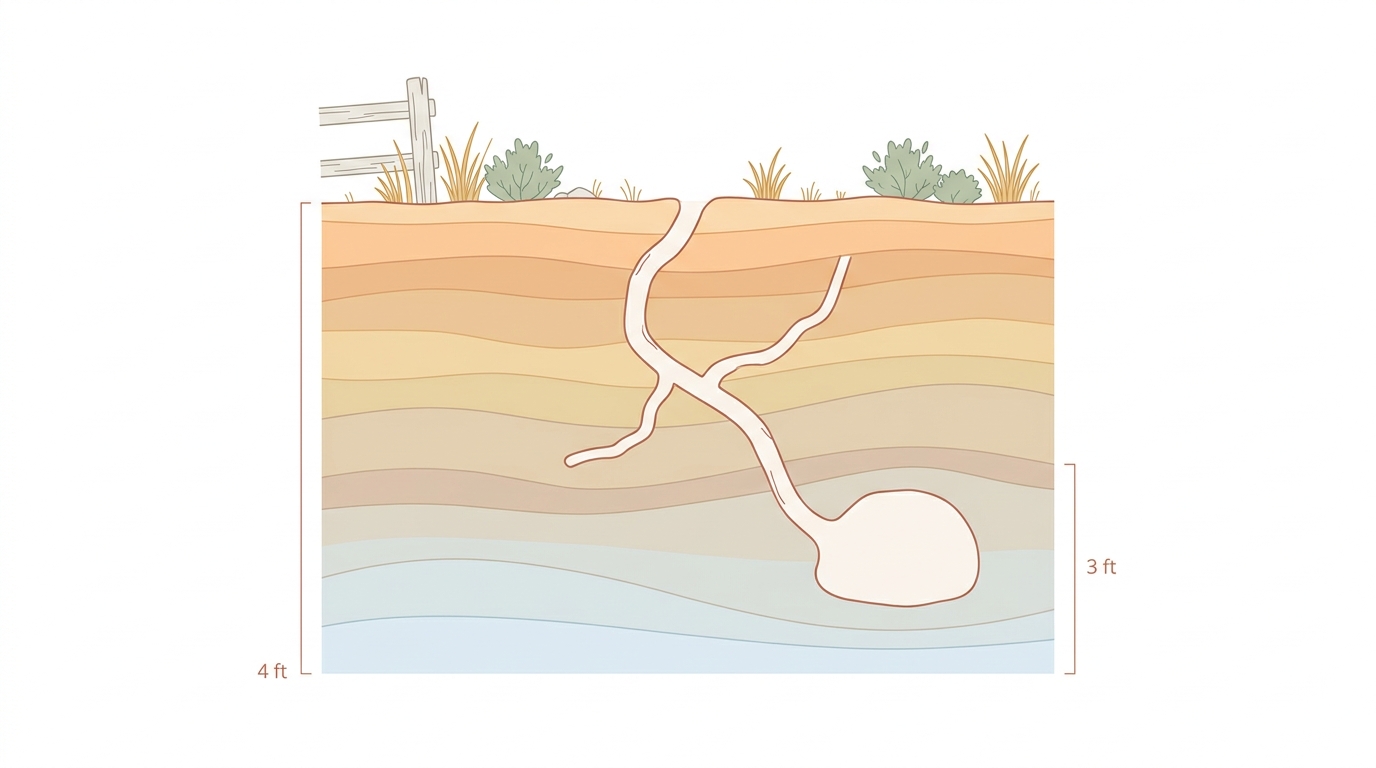
The diagram labels the full section at 4 ft and the underground chamber depth at 3 ft.
The cage was never for the rabbit
Wire cages became standard because rabbits were farmed and studied before they were companions. A cage is easy to clean, stackable, and cheap. None of those are reasons that have anything to do with the animal inside it.
A rabbit is built to run, to stand up on its back legs, to dig, and to bolt into cover. A cage prevents every one of those things. Given the choice between a hutch and a room, a rabbit picks the room every time and never goes back.
What a rabbit actually needs
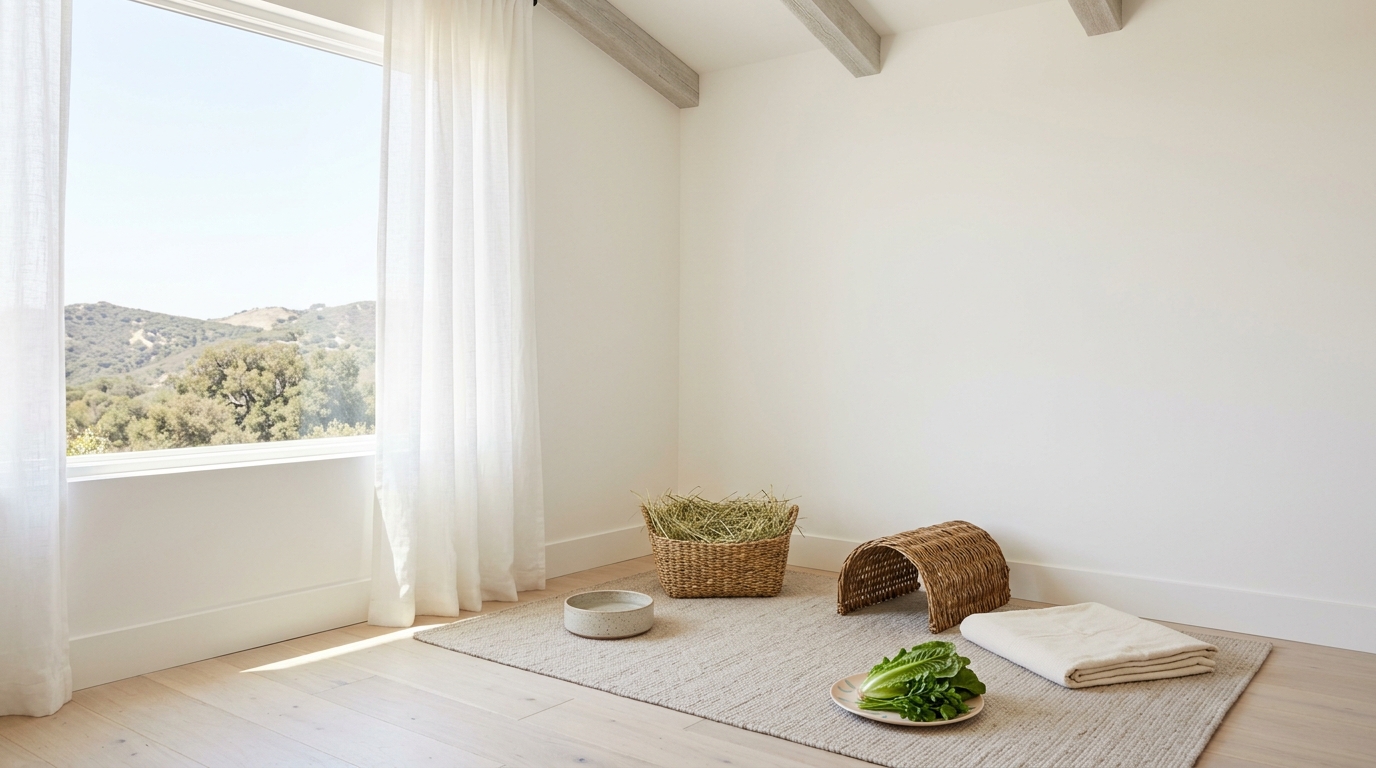
Room to move. Enough space for three consecutive hops and to stand fully upright on its hind legs without its ears touching anything. For most rabbits that means a pen of at least sixteen square feet plus daily free time outside it, or better, a rabbit-proofed room.
Secure footing. Wire floors cause sore hocks, a painful ulceration of the foot pad. Slick laminate and tile prevent a rabbit from moving normally and, over time, cause it to move less. Rugs, mats, cork, and low-pile carpet are all fine.
Somewhere to hide. A rabbit that cannot get out of sight cannot relax. Two hides minimum, with two exits each, because one exit is a trap.
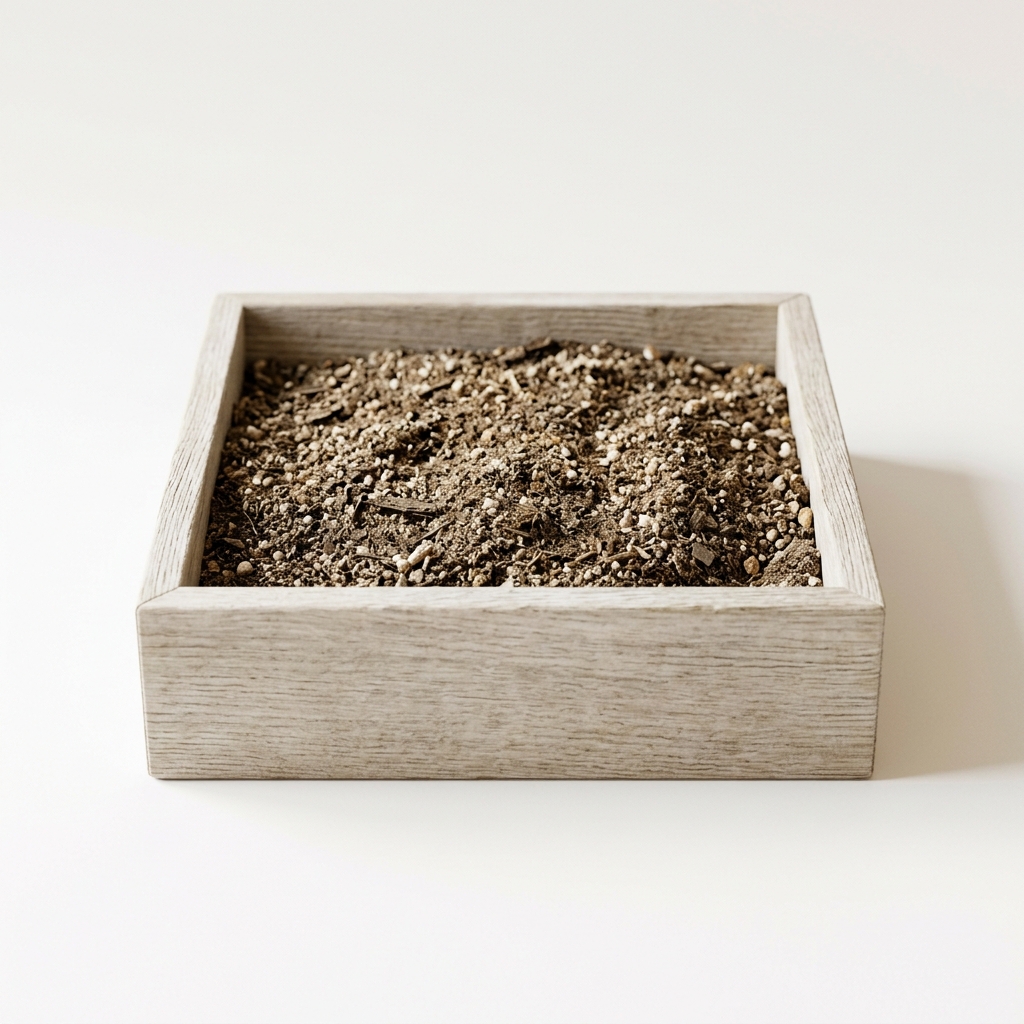
Somewhere to dig. A shallow box of soil, shredded paper, or safe bedding. Digging is not a bad habit to train out. It is the behavior the animal is built around.
Company. Rabbits are a social species. A single rabbit needs substantially more human attention than a bonded pair needs from anyone.
Why noise and predators matter more than space
This is the part that gets missed, and it matters more than square footage.
A rabbit is a prey animal. Its entire physiology is organized around detecting threat and surviving it. When a rabbit is frightened or in pain, it releases catecholamines, and those hormones slow the movement of the gut. This is well established in the veterinary literature and it is the direct mechanism linking stress to illness in this species.
A slowed gut is gastrointestinal stasis, and it is not a minor complaint. The Royal Veterinary College identifies gut stasis as the single most common reason rabbits are presented to its hospital, and names the presence of predators, construction noise, and fireworks among the stressors that trigger it. One retrospective study found GI stasis in over a quarter of rabbit patients presenting to clinical practice. Untreated, severe cases can kill in under twenty-four hours.
Now put that rabbit in a room with barking dogs and hunting cats.
It cannot leave. It cannot get underground. Its hearing is far more sensitive than ours and it is reading every sound in the building as exactly what it is. There is no door to close.
So it does the only thing available to it, which is hold still. The veterinary literature is explicit that a rabbit's survival response is to remain motionless to avoid detection, and that this makes a distressed rabbit appear stoic. A frightened rabbit looks like a calm rabbit. That is the whole problem.
The animal stops eating. The gut slows. And because rabbits evolved to conceal weakness from predators, nobody sees the decline until it is advanced.
What this means for how rabbits are housed in shelters
Municipal shelters were built for dogs and cats. A rabbit that arrives gets a wire cage, because a wire cage is what there is, and that cage sits in a building full of the two animals most likely to eat it.
The rabbit freezes. The freeze reads as calm. It stops eating, the gut slows, and the ones who survive get labeled unfriendly, because a terrified animal does not show well to an adopter.
Nobody working in those buildings wants this. There is nowhere else to put them.
That is the entire reason Blue's Bunny Kingdom exists. Open ground, no predators, a colony, and soil deep enough to dig a burrow. A burrow is not enrichment. It is how a rabbit manages fear, and taking it away is the injury.
If you already have a cage
You do not have to throw it out. Take the door off and leave it as a hide. Most rabbits will keep using it as a bedroom once it stops being a prison, and litter habits usually improve rather than deteriorate.
Start with one rabbit-proofed room. Cover exposed cable in split loom tubing, block gaps behind appliances, move houseplants, and expect baseboards to need protecting. Expand from there.
Common questions
- Is a hutch cruel?
- A hutch used as a rabbit's entire world is inadequate housing regardless of intent. Used as a shelter within a larger secured space, it is fine.
- How big should a rabbit's enclosure be?
- Large enough for three consecutive hops and to stand fully upright on the hind legs. Sixteen square feet is a reasonable floor for a pen, alongside daily time outside it. More is better and no rabbit has ever been harmed by too much room.
- Can rabbits live outside?
- Not safely in Southern California. Rabbit hemorrhagic disease virus 2 is present in the local wild rabbit population and spreads through contact with contaminated ground, insects, and predator droppings. Add coyotes, heat, and wildfire, and outdoor housing here carries risk that indoor housing does not.
- Do rabbits need a cage at night?
- No. A rabbit-proofed room is safe overnight. Rabbits are crepuscular and are most active at dawn and dusk, so confining them overnight restricts them during hours they would naturally use.
- My rabbit chews everything. Isn't a cage safer?
- Rabbit-proofing solves chewing. Confinement does not, and a bored, confined rabbit chews more rather than less.
Sources
- Royal Veterinary College, guidance on reducing the risk of gut stasis in rabbits
- MSPCA-Angell, differentiating gastrointestinal stasis from obstruction
- Veterinary Times, managing GI stasis in rabbits
- dvm360, diagnosing and treating gastric ileus in rabbits
- Rahic-Seggerman et al., PLOS ONE, 2025